About
Our Music Psychology, Music Performance Science, and Music Performance Teaching (MP3) Lab comprises a multidisciplinary team of dedicated researchers. Our work explores fundamental questions about the nature of musicality for individuals and societies, and we recognise the diverse ways in which musical engagement enriches everyday life.
The MP3 lab was founded in 2020 with the mission to foster a collaborative community where staff and graduate researchers work together to explore the psychological dimensions of music and its influence on individuals and society. As a leading research lab situated within Australia’s top university, we are committed to advancing the fields of music psychology, performance science, and performance teaching, through innovative and impactful research. We strive for excellence in all aspects of our work, promoting a supportive environment that encourages the next generation of scholars and thought leaders.
Our researchers collaborate with other disciplines and departments at the University of Melbourne, as well as national and international institutions, in ways that promote exploration, innovation, and experimentation. In addition to our commitment to academic rigor, we pride ourselves on cultivating a creative environment where curiosity and the joy of music are at the heart of everything we do.
Our people
Postdoctoral Researchers
Graduate researchers
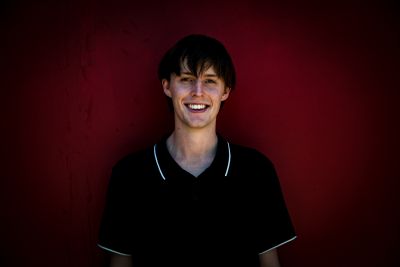
Thomas Bell - Master of Music Psychology
Thomas researches the relationship between music and language processing. His research takes a focus on the multistable elements of music and language perception, and how our expectations guide the reality of what we experience.

Joanna Brooke - PhD, Music Psychology
Joanna's research is currently exploring the use of play and improvisation to promote psychosocial wellbeing outcomes in singing interventions with university students.

Ben Loveridge - PhD, Music Psychology
Ben is investigating the intersection of music performance and virtual reality. Ben’s research aims to improve musical outcomes through the use of performance simulation in virtual environments.
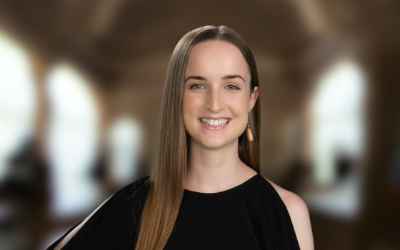
Xanthe Lowe-Brown - PhD, Music Psychology/Human-Computer Interaction
Xanthe’s research aims to enhance wellbeing outcomes for music listeners by improving recommendation algorithms used by music streaming services such as Spotify to recommend music helps users regulate their emotions.
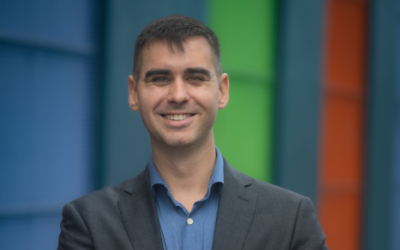
Nicholas Matherne - PhD, Music Psychology
Nick's research explores the motivation for lifelong music-making, including factors which contribute to participation in music-making and the perceived benefits of music-making on well-being.

Simone Maurer
Simone is researching the embodied cognition of solo flute players.

Luiza Mesquita – PhD, Music Therapy (Music Education)
Luiza is exploring how facilitators perspectives when leading music groups for children with and without disabilities. She is interested in the range of background from facilitators in this field and how inclusion influences planning and pedagogical decision-making.

Bernard Monaghan - Master of Performance Science
Bernard's research examines "movement efficiency" in the context of piano technique both conceptually, seeking to clarify what is meant by the term in pedagogical literature, and empirically through a study involving 3D motion analysis of twenty pianists performing different piano touch procedures.

Hannah Taylor - PhD, Music Psychology
Hannah’s research aims to add to knowledge of the mechanisms underpinning experiences of reward and pleasure, which will better inform therapeutic practices with music for people with eating disorders and provide novel music-based intervention approaches.
Liam Whitbourn - PhD, Music Psychology and Music Education
Liam's research aims to explore how adapting and applying an established language teaching methodology within music teaching may assist instrumental music students in their acquisition of music skills.

Eloise Whitehead - Master of Music (Research) - Music Psychology
Eloise's research seeks to explore the ways in which synesthesia impacts the creative process of music composers.

George (Georgina) Williams - PhD, Music Psychology
George’s research explores cross-cultural considerations in postnatal communal singing to better support perinatal mental health. By examining how diverse cultural groups engage with group singing, her work aims to identify distinct community needs and develop scalable, music-based interventions that improve health outcomes for birthing parents across Australia.
Study with us
Courses in Music Psychology
Subjects in Music Psychology
Publications
Cochrane, T., Galvin, K., Buskes, G., Lam, L., Rajagopal, V., Glasser, S., Osborne, M., Loveridge, B., Davey, C., John, S., Townsin, L., & Moss, T. (2026). Design-Based Research in Higher Education: Analysing Examples Through Activity Theory and Bakker’s Five Characteristics. Journal of University Teaching and Learning Practice. https://doi.org/10.53761/fndvmz42
Evans, R. J., Yeom, D., Tao, A., Ip, R. H. L., & Dean, B. (2026). Patterns and predictors of children’s musical engagement from an Aotearoa NZ longitudinal cohort. Journal of the Royal Society of New Zealand, 56(1), Article e70017. https://doi.org/10.1002/snz2.70017
Gill, A., Osborne, M.S., McPherson, E.G. (2026). Building confidence in music lessons: A teacher-led self-efficacy approach. Music Education Research, 1-21. https://doi.org/10.1080/14613808.2026.2672352
Kirts, C., Saarikallio, S., Anderson, C. J., Bannister, S., Céspedes-Guevara, J., Heng, G. J., Henry, N., Jakubowski, K., Koehler, F., Krause, A. E., Lennie, T. M., Martínez, I. C., O’Neill, K., Warrenburg, L., & Eerola, T. (2026). Measuring emotional experiences to music – Content validity assessment for episode model constructs. Music & Science, 9, 1-17. https://doi.org/10.1177/20592043251413550
Krause, A. E., Yeom, D., McKenzie, S., Glasser, S., & Osborne, M. (2026). Latent profile analysis reveals four distinct younger adult music listener typologies. Musicae Scientiae, Advance online publication. https://doi.org/10.1177/10298649261419800
Liu, H. H., Miller, S. E., Lee, M. A., Matherne, N., Miller, D. J., & D’Aprano, E. (2026). Using Generative Artificial Intelligence to Identify Themes of Basic Psychological Needs in Popular Song Lyrics. Psychology of Music, 0(0). https://doi.org/10.1177/03057356261465628
Loveridge, B., Glasser, S., Osborne, M. S., & Genay, A. (2026). “I’ve Got Tingles in my Spine”: Understanding Musicians’ Experience in a Virtual Reality Concert Hall Performance Simulation. In Designing Interactive Systems Conference (DIS ’26), June 13–17, 2026, Singapore, Singapore. ACM, New York, NY, USA, 3542-3554. https://doi.org/10.1145/3800645.3813039
Lowe-Brown, X., Glasser, S., Wadley, G., & Koval, P. (2026). Personalised affect-regulation playlists: A pre-registered experimental test of the iso principle in the general population. Musicae Scientiae. Advance online publication. https://doi.org/10.1177/10298649261421187
Lowe-Brown, X., Koval, P., Glasser, S., & Wadel, G. (2026). Designing for Emotion Regulation in Popular Music Apps: Evaluation of MoodDJ, a Novel Spotify Plugin. In Designing Interactive Systems Conference (DIS ’26), June 13–17, 2026, Singapore, Singapore. ACM, New York, NY, USA, 2559-2579. https://doi.org/10.1145/3800645.3812960
MacArthur, S., Davidson, J. W., & Krause, A. E. (2026). Children’s initial interest in learning the cello: An interpretative phenomenological analysis. Psychology of Music, advance online publication.
Mazzarolo, I., Burwell, K., Osborne, M., & Schubert, E. (2026). An investigation of studio music teachers’ strategies to manage music performance anxiety. Research Studies in Music Education. https://journals.sagepub.com/doi/10.1177/1321103X251410523
McClymont, R. G., & Krause, A. E. (2026). The impact of a focused listening experience on self-compassion and mental health help-seeking. Psychology of Music, 54(3), 338-359. https://doi.org/10.1177/03057356251324825
Osborne, M.S., & Walton, C. C. (in press 2026). Mental health and performance anxiety among gifted young musicians. In G. López-Íñiguez & G. E. McPherson (Eds.), Caring for gifted and talented music learners: Perspectives and future possibilities. Oxford University Press.
Putter, K. C., Miller, D. J., & Belfi, A., Rees, J., & Krause, A. E. (2026). Character judgements of rap music fans. Psychology of Music, advance online publication. https://doi.org/10.1177/03057356261424252
Vidas, D., Nitschinsk, L., Osborne, M. S., & Rickard, N. S. (2026). Validating Spotify’s ‘Valence’, ‘Energy’, and ‘Danceability’ audio features for music psychology research. Music Perception, 1-14. https://doi.org/10.1525/mp.2026.2463161
Yeom, D., Stead, K. S., Tan, Y. T., McPherson, G. E., Mosing, M. A., & Wilson, S. J. (2026). Genetic and environmental influences on singing self-evaluation and its relationship with singing ability: An Australian twin study. Behavior Genetics, 56, 66-79. https://doi.org/10.1007/s10519-026-10254-4
Yeom, D., & Wilson, S. J. (forthcoming 2026). The genetic basis of musicality. In P. Pearl and S. Arfaie (Eds.), Music, Medicine, and the Neurobiology of Creativity. Cambridge University Press.
Bairnsfather, J. E., Mosing, M. A., Osborne, M. S., & Wilson, S. J. (2025). Conceptual coherence but methodological mayhem: A systematic review of absolute pitch phenotyping. Behavior Research Methods, 57(2), 1-27. https://doi.org/10.3758/s13428-024-02577-z
Brooke, J., Lenette, C., Wobcke, M., & Wells, M. (2025). Revaluing Indigenous Models in Suicidology: A Brief Narrative Synthesis. Social Sciences, 14(4), 229–229. https://doi.org/10.3390/socsci14040229
Crooke, A., Morris, N., Komba, M., McHarg, S., Soemardjo, R., Lee, B., Fraser, T., & Davidson, J. (2025). Practitioner experiences of intercultural music engagement (ICME) in the community arts sector. International Journal of Community Music, 18(1). https://doi.org/10.1386/ijcm_00117_1
Forbes, M., Goopy, J., & Krause, A. E. (2025). Becoming singular: Musical identity construction and maintenance through the lens of Identity Process Theory. Psychology of Music, 53(5), 746-761. https://doi.org/10.1177/03057356241267863
Fraser, T. (2025). Cultivation of global consciousness through intercultural music engagement. Asian Journal of Social Psychology, 28(3). https://doi.org/10.1111/ajsp.70022
Glasser, S., Loveridge, B., & Chan, Z. (2025). Modelling the phenomenological aspects of a music composer’s sound-colour synaesthesia in virtual reality. Proceedings from the Synaesthesia: Science and Art International Conference. Alcala la Real, Spain.
Glasser, S., Osborne, M. S., Loveridge, B., Sparrow, L., & Kelly, R. (2025). Consent, connection, and creativity: Navigating the ethical boundaries of using biometric data in artistic performance. In E. K. Sunde, V. Bartlett, & J. Pfefferkorn (Eds.), Decentring ethics: AI art as method (pp. 259-278). Open Humanities Press. www.data-browser.net/db09.html
Glasser, S., Osborne, M.S., & Loveridge, B. (2025). Transformative musical futures: Building tomorrow’s virtual performances together. Pacific Journal of Technology Enhanced Learning, 7(2), 49. https://doi.org/10.24135/pjtel.v7i2.237
Goopy, J., & MacArthur, S. L. R. (2025). Music learning and school-aged children’s and adolescents’ wellbeing: A scoping review. Research Studies in Music Education, 0(0). https://doi.org/10.1177/1321103X251323562
Krause, A. E., & Fletcher, H. (2025). Radio relationships: Perceptions on listenership and well-being. Australasian Journal on Ageing, advance online publication. https://doi.org/10.1111/ajag.70008
Krause, A. E., Forbes, M., & Lowe-Brown, X. (2025). Does Reality Television-Style Singing Influence Singing Self-Concept? Journal of Voice, 39(1), 280.e15-280.e24. https://doi.org/10.1016/j.jvoice.2022.06.024
Krause, A. E., McKenzie, S., Glasser, S., & Osborne, M. S. (2025). The impact of COVID-19 on the perceived value of music listening. Music & Science, 8, 1-12. https://doi.org/10.1177/20592043251324739
Lowe-Brown, X., Glasser, S., Koval, P., & Wadley, G. (2025). Would You Tell Spotify How You're Feeling? Exploring Acceptability and Ethics of Emotion-Regulation Plugins for Music Streaming Apps. In Proceedings of the 36th Australasian Conference on Human-Computer Interaction (OzCHI '24). Association for Computing Machinery, New York, NY, USA, 351–367. https://doi.org/10.1145/3726986.3726998
MacArthur, S. L. R., Davidson, J. W., & Krause, A. E. (2025). Seven-year-old beginner cellists’ lived experiences of music performance. Research Studies in Music Education, 0(0). https://doi.org/10.1177/1321103X251322313
McClymont, R. G., & Krause, A. E. (2025). The impact of a focused listening experience on self-compassion and mental health help-seeking. Psychology of Music, advance online publication. https://doi.org/10.1177/03057356251324825
McFerran, K. S., Krause, A. E., & Osborne, M. S. (2025). Exploring the feasibility of collecting music and wellbeing data to examine intentional listening using a mobile-ESM application. Frontiers in Psychology, 16 https://doi.org/10.3389/fpsyg.2025.1505929
McKenzie, S. M., Krause, A. E., Glasser, S., & Osborne, M. S. (2025). Exploring the role of music listening in cultivating self-compassion. Psychology of Music, 0(0). https://doi.org/10.1177/03057356251381818
Mornell, A., Osborne, M. S., Kageyama, N., & Heuser, F. (2025). Editorial: Motivation in learning and performance in the arts and sports. Frontiers in Psychology, 16. https://doi.org/10.3389/fpsyg.2025.1554109
Osborne, M.S, Glasser, S., & Loveridge, B. (2025). Bridging Realities: design possibilities for virtual music performance coaching. Pacific Journal of Technology Enhanced Learning, 7(2), 43-44. https://doi.org/10.24135/pjtel.v7i2.233
Perkins, R., Sanfilippo, K-R. M., Graham, D., Durrant, M., Alway, P., Anstee, L., Corcoran, K., East, E., Ettenberger, M., Knight, J., Krause, A. E., Lense, M., McCaffrey, T., McConnell, B., Ortiz, T., Spiro, N., Swanwick, R., Tuncgenc, B., & the Music and Parental Wellbeing Research Network (2025). Music and parental wellbeing: A position paper. Music & Science, 8, 1-10. https://doi.org/10.1177/20592043251351761
Shoebridge, A., & Osborne, M. S. (2025). Wellbeing for young elite musicians: development of a health protocol from a student perspective. Frontiers in Psychology, 16. https://doi.org/10.3389/fpsyg.2025.1401511
Walton, C. C., Kirby, J. N., McKenzie, S., Gao, C. X., Purcell, R., Rice, S. M., & Osborne, M. S. (2025). A preliminary investigation into self-compassion and compassion-based intervention for mental health in the performing arts. Frontiers in Psychology, 16. https://doi.org/10.3389/fpsyg.2025.1512114
Whitehead, E., Glasser, S., & McPherson, G. E. (2025). Exploring the Impact of Synaesthesia on Musical Creativity. Proceedings from the Synaesthesia: Science and Art International Conference. Alcala la Real, Spain.
Cochrane, T., Galvin, K., Glasser, S., Osborne, M., Buskes, G., & Rajagopal, V. (2024). Exploring Design-Based Research as a framework for addressing pedagogical problems faced by higher education. ASCILITE Publications, 171-173. https://doi.org/10.14742/apubs.2024.1335
Crooke, A. H. D., Thompson, W. F., Fraser, T., & Davidson, J. (2024). Music, social cohesion, and intercultural understanding: A conceptual framework for intercultural music engagement. Musicae Scientiae, 28(1). https://doi.org/10.1177/10298649231157099
Crooke, A., Davidson, J., & Fraser, T. (2024). Exploring the Real-World Applicability of an Intercultural Music Engagement (ICME) Framework. Journal of Intercultural Studies. https://doi.org/10.1080/07256868.2024.2362747
Glasser, S., Osborne, M. S., & Krause, A. E. (2024). High levels of synesthetic endorsement in a study on music listening styles. First Joint UKSA and ASA International Synaesthesia Conference, Oxford, UK. https://researchonline.jcu.edu.au/83012/
Krause, A. E., Yeom, D., Osborne, M., & Glasser, S. (2024). Can we categorise listeners: A latent profile analysis. 32–32. https://researchonline.jcu.edu.au/83048/
Lowe-Brown, X., Glasser, S., Koval, P., & Wadley, G. (2024). Would You Tell Spotify How You’re Feeling? Exploring Acceptability and Ethics of Emotion-Regulation Plugins for Music Streaming Apps. Australian Conference on Computer-Human Interaction (OzCHI ’24), 351-367. https://doi.org/10.1145/3726986.3726998
MacArthur, S. L. R., Davidson, J. W., & Krause, A. E. (2024). Uncovering children’s experiences of emergent learning difficulties in the instrumental music studio. International Journal of Music Education, 0(0). https://doi.org/10.1177/02557614241287824
Matherne, N. (2024). Experiences of first-year music teachers in Hawaiʻi during the COVID-19 pandemic: Challenges, adaptability, and implications for future music teaching. Journal of Music Teacher Education, 33(2), 12-28. https://doi.org/10.1177/10570837231178891
McKenzie, S., Glasser, S., Krause, A., & Osborne, M. (2024). Exploring music listening’s influence on self-compassion through an adapted scale. 36–36. https://researchonline.jcu.edu.au/83046/
Rocke, S., Davidson, J. W., & Krause, A. E. (2024). Wellbeing in professional chamber music performance contexts. Musicology Australia, 46(2), 138-167. https://doi.org/10.1080/08145857.2025.2457244
Sparrow, L. A., Galwey, C., Loveridge, B., Glasser, S., Osborne, M. S., & Kelly, R. M. (2024, 15 May). Heart and Soul: The Ethics of Biometric Capture in Immersive Artistic Performance. In Proceedings of the 2024 CHI Conference on Human Factors in Computing Systems, May 11-16, Honolulu, HI, Hawaiʻi (pp.1-23). https://doi.org/10.1145/3613904.3642309 https://chi2024.acm.org/
Yeom, D., Haslam, N., Tan, Y. T., McPherson, G. E., & Wilson, S. J. (2024). Twin data support a sensitive period for singing ability. Twin Research and Human Genetics, 27(4–5), 204–214. https://doi.org/10.1017/thg.2024.30
Blackwell, J., Matherne, N., & McPherson, G. E. (2023). A PRISMA review of research on feedback in music education and music psychology. Psychology of Music, 51(3), 716-729. https://doi.org/10.1177/03057356221109328
Cochrane, T., Galvin, K., Buskes, G., Lam, L., Rajagopal, V., Glasser, S., Osborne, M. S., Loveridge, B., Davey, C., John, S., Townsin, L. & Moss, T. (2023). Design-Based Research: Enhancing pedagogical design. In T. Cochrane, V. Narayan, C. Brown, K. MacCallum, E. Bone, C. Deneen, R. Vanderburg, & B. Hurren (Eds.), People, partnerships and pedagogies. Proceedings ASCILITE 2023. Christchurch (pp. 351-356). https://doi.org/10.14742/apubs.2023.489
Glasser, S., & McPherson, G. E. (2023). The Role of Natural Abilities in Early Childhood Musical Development. In M. Barrett & G. Welch (Eds.), The Oxford Handbook of Early Childhood Music Learning and Development (Chapter 51). Oxford: Oxford University Press.
Kirsner, J., Wilson, S. J., & Osborne, M. S. (2023). Music performance anxiety: the role of early parenting experiences and cognitive schemas. Frontiers in Psychology, 14, 1-17. https://doi.org/10.3389/fpsyg.2023.1185296
MacArthur, S. L. R., Davidson, J. W., & Krause, A. E. (2023). Interpreting 7-year-old beginner cellists’ experiences of practice. Research Studies in Music Education, 46(1), 114-133. https://doi.org/10.1177/1321103X231209717 (Original work published 2024)
Mazzarolo, I., Burwell, K., & Schubert, E. (2023). Teachers’ approaches to music performance anxiety management: a systematic review. Frontiers in Psychology, 14. https://doi.org/10.3389/fpsyg.2023.1205150
Osborne, M. S. (2023). Supporting students with music performance anxiety. In J. Blackwell (Ed.), Teaching Music Performance: A guide for evidence-based pedagogy. (pp. 83-98). Australian Music Education Board.
Yeom, D., Stead, K. S., Tan, Y. T., McPherson, G. E., & Wilson, S. J. (2023). How accurate are self‐evaluations of singing ability? Annals of the New York Academy of Sciences, 1530(1), 87–95. https://doi.org/10.1111/nyas.15081
Bairnsfather J. E., Osborne M. S., Martin C., Mosing M. A., Wilson S. J. (2022) Use of explicit priming to phenotype absolute pitch ability. PLOS ONE 17(9): e0273828. https://doi.org/10.1371/journal.pone.0273828
Bairnsfather, J., Ullén, F., Osborne, M.S., Wilson, S.J., & Mosing, M. (2022). Investigating the Relationship Between Childhood Music Practice and Pitch-Naming Ability in Professional Musicians and a Population-Based Twin Sample. Twin Research and Human Genetics, 25(3), 140-148. https://doi.org/10.1017/thg.2022.29
Gill, A., Osborne, M. S., & McPherson, G. E. (2022). Sources of self-efficacy in class and studio music lessons. Research Studies in Music Education, 46(1), 4-27. https://doi.org/10.1177/1321103x221123234
Krause, A., Osborne, M., Glasser, S., & McKenzie, S. (2022). “I value music so much more”: The impact of COVID-19 on the value of music listening. SEMPRE 50th Anniversary Conference, London, UK. https://sempre.org.uk/50th
Lowe-Brown, X., & Glasser, S (ed.). (2022). Individual Differences in the Experience of Musically-Evoked Chills [Honour’s dissertation, University of Melbourne]. http://hdl.handle.net/11343/325153
Matherne, N. (2022). Investigating well-being and participation in Florida New Horizons ensembles through the PERMA framework. International Journal of Community Music. 15(2), 283–311. https://doi.org/10.1386/ijcm_00064_1
Mazzarolo, I., & Schubert, E. (2022). A short performance anxiety scale for musicians. Frontiers in Psychology, 12. https://doi.org/10.3389/fpsyg.2021.781262
Osborne, M. S., & Kirsner, J. (2022). Music performance anxiety. In G. E. McPherson (Ed.), Oxford Handbook of Music Performance (Vol. 2, pp. 204-231). Oxford University Press. https://doi.org/10.1093/oxfordhb/9780190058869.013.11
Osborne, M. S., Glasser, S., & Loveridge, B. (2022). ‘It’s not so scary anymore. It’s actually exhilarating’: A proof-of-concept study using virtual reality technology for music performance training under pressure. In S. Wilson, N. Arthars, D. Wardak, P. Yeoman, E. Kalman, & D. Y. T. Liu (Eds.), Reconnecting relationships through technology. Proceedings of the 39th International Conference on Innovation, Practice and Research in the Use of Educational Technologies in Tertiary Education, ASCILITE 2022 in Sydney: e22116. ASCILITE. https://doi.org/https://doi.org/10.14742/apubs.2022.116
Walton, C. C., Osborne, M. S., Gilbert, P., & Kirby, J. (2022). Nurturing self-compassionate performers. Australian Psychologist, 57(2), 77-85. https://doi.org/10.1080/00050067.2022.2033952
Yeom, D., Tan, Y. T., Haslam, N., Mosing, M. A., Yap, V. M. Z., Fraser, T., McPherson, G. E., Hildebrand, M. S., Berkovic, S. F., Peretz, I., & Wilson, S. J. (2022). Genetic factors and shared environment contribute equally to objective singing ability. iScience, 25(6), 104360. https://doi.org/10.1016/j.isci.2022.104360
Forbes, M., Krause, A. E., & Lowe-Brown, X. (2021). Descriptions and Evaluations of “Good Singing” in the Age of The Voice. Australian Voice, 22, 16-28. https://doi.org/10.56307/VRXQ8982
Fraser, T., Crooke, A. H. D., & Davidson, J. W. (2021). “Music has no borders”: An exploratory study of audience engagement with youtube music broadcasts during covid-19 lockdown, 2020. Frontiers in Psychology, 12. https://doi.org/10.3389/fpsyg.2021.643893
Krause, A. E., Glasser, S., & Osborne, M. (2021). Augmenting Function with Value: An Exploration of Reasons to Engage and Disengage from Music Listening. Music and Science, 4, 1-13. https://doi.org/10.1177/20592043211022535
Osborne, M. S., McPherson, G. E., Miksza, P., & Evans, P. (2021). Using a microanalysis intervention to examine shifts in musician’s self-regulated learning. Psychology of Music, 49(4), 972-988. https://doi.org/10.1177/0305735620915265
Vidas, D., Larwood, J. L., Nelson, N. L., & Dingle, G. A. (2021). Music listening as a strategy for managing covid-19 stress in first-year university students. Frontiers in Psychology, 12. https://doi.org/10.3389/fpsyg.2021.647065
Clarke, L. K., Osborne, M. S., & Baranoff, J. (2020). Examining a group Acceptance and Commitment Therapy intervention for music performance anxiety in student vocalists. Frontiers in Psychology, 11(1127). https://doi.org/10.3389/fpsyg.2020.01127
Mornell, A., Osborne, M. S., & McPherson, G. E. (2020). Evaluating practice strategies, behavior and learning progress in elite performers: An exploratory study. Musicae Scientiae, 24(1), 130-135. https://doi.org/10.1177/1029864918771731
Osborne, M. S. (2020). Entering the live-streaming void and emerging victorious: teaching performance psychology under pressure. International Journal on Innovations in Online Education, 4(2). https://doi.org/10.1615/IntJInnovOnlineEdu.2020035052
Osborne, M. S., Munzel, B., & Greenaway, K. H. (2020). Emotion goals in music performance anxiety. Frontiers in Psychology, 11(1138). https://doi.org/10.3389/fpsyg.2020.01138
Vidas, D., Calligeros, R., Nelson, N. L., & Dingle, G. A. (2020). Development of emotion recognition in popular music and vocal bursts. Cognition and Emotion, 34(5), 906–919. https://doi.org/10.1080/02699931.2019.1700482
Contact us
Find out more about MP3 Lab or ask our team a question mp3-lab@unimelb.edu.au