Opera students from the Melbourne Conservatorium of Music present a chilling new take on Hansel and Gretel
Many of us are aware that there are darker, more sinister sides to the Disneyfied fairytales we were enchanted by as children. In the original Cinderella, the ugly stepsisters cut off their toes to fit their feet into the glass slipper and woo the prince. In Sleeping Beauty, the prince doesn’t merely just kiss Aurora but impregnates her, and she gives birth to a child all while in a comatose state. And in The Little Mermaid, Ariel is silenced not by a sea witch’s spell, but by having her tongue cut out.
In the case of Hansel and Gretel, you’d be forgiven for thinking that even the sanitised version we all know is sinister enough. A family ravaged by poverty, an evil stepmother who banishes Hansel and Gretel to the woods so she has two less mouths to feed, and a witch who kidnaps them to enslave one and eat the other – it’s already the stuff of nightmares. But German composer Engelbert Humperdinck’s 1893 opera ‘Hänsel und Gretel‘, which is being performed by Master of Music (Opera Performance) students from the Melbourne Conservatorium of Music in their 2024 showcase performance, takes the dark themes from the Grimm fairytale even further.
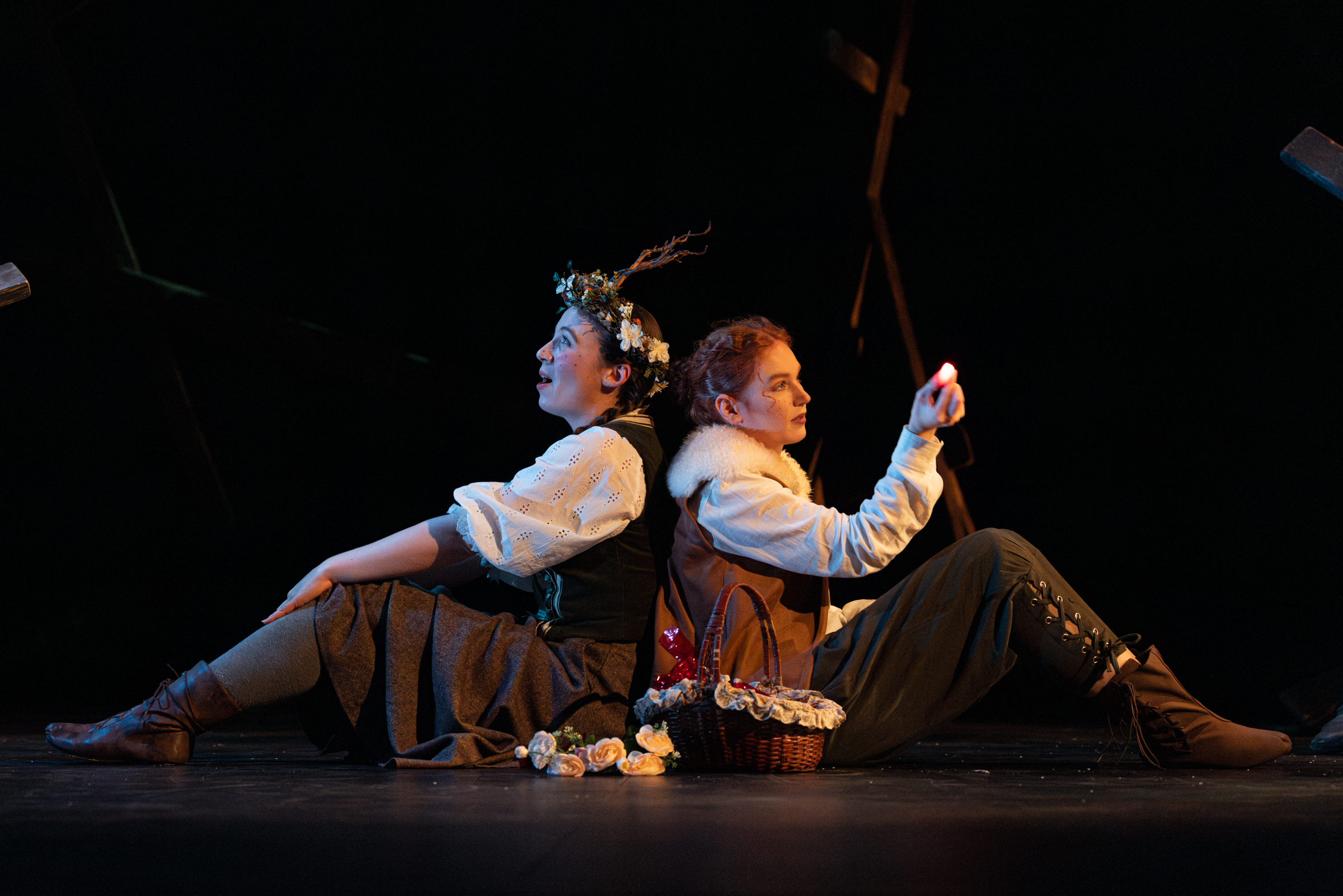
Lisette Bolton as Gretel and Chloe James as Hansel, photo by Ben Fon, Fon Photography 2024
Professor Jane Davidson, coordinator of the Opera program at the Conservatorium, and director of the Hänsel und Gretel performances, was conscious that she wanted to make the opera accessible for children as well as adults, and that the dark and scary German version wouldn’t be appropriate for a younger audience. She decided to produce two versions of Hänsel und Gretel, the original German in the evening for adults and a shortened version in English for school-aged children and their families as a matinee.
“We know Hansel and Gretel as a Grimm fairytale, but it actually has a much longer history and is based in historical precedent,” Jane explains. “In the Middle Ages, families were so desperate and starving that they would abandon children and let them die. Or worse still, there were stories of cannibalism. The tale is also deeply religious, again with morals of the Medieval period pervading: that a guardian angel will watch over you, and good will shine through.”
“If you recall the story as told by the Grimm Brothers, it’s pretty gruesome – the witch planning to eat the children, and then essentially getting burned alive. But our version for children the witch is funny and eccentric, and when she gets pushed into the oven it’s a big laugh,” continues Jane.
“But in the German version aimed at adults, we’ve gone for a much darker take. It’s been a great exercise to get the students to think at a different level. In many of the scenes, the blocking is the same for both the English and German versions, but the intention behind how to play the character is very different. It's a good provocation for the students."
"In the German version, we really challenge the audience to look deep into the set and costumes and the behaviours of a male witch, who at one level seems to be integrated into society, but at another is carrying out despicable acts. The work raises moral issues about what we see and choose not to see.”
In many of the scenes, the blocking is the same but the intention behind the character will be very different. It’s a good provocation for the students.
The Master of Music (Opera Performance) students have multiple opportunities to perform as part of the run of shows, and to experiment by playing different roles. Many of the students are performing in both the English and German versions of the opera.
Nicholas, who is one of the performers who plays Hansel and Gretel’s father in both the English and German versions, has given a lot of thought to the differences between playing his character for children versus adults.
“In the English version, the character is a little bit more light-hearted, comical even. He's kind of a likable character,” he explains.
“Whereas in the German version, he's got a bit more of a dark backstory. He's probably grown up with a bit of abuse, and he's repeating this cycle and taking that abuse out on his family. The intention behind our movements on stage are going to be very different.”
In both versions, the father will be portrayed as having a dependence on alcohol, which adds an extra layer of challenge for the performers.
“In the version for children, the father is this cartoonishly drunk person who is happy and fun. It’s definitely played for laughs,” says James, also playing Hansel and Gretel’s father in both operas.
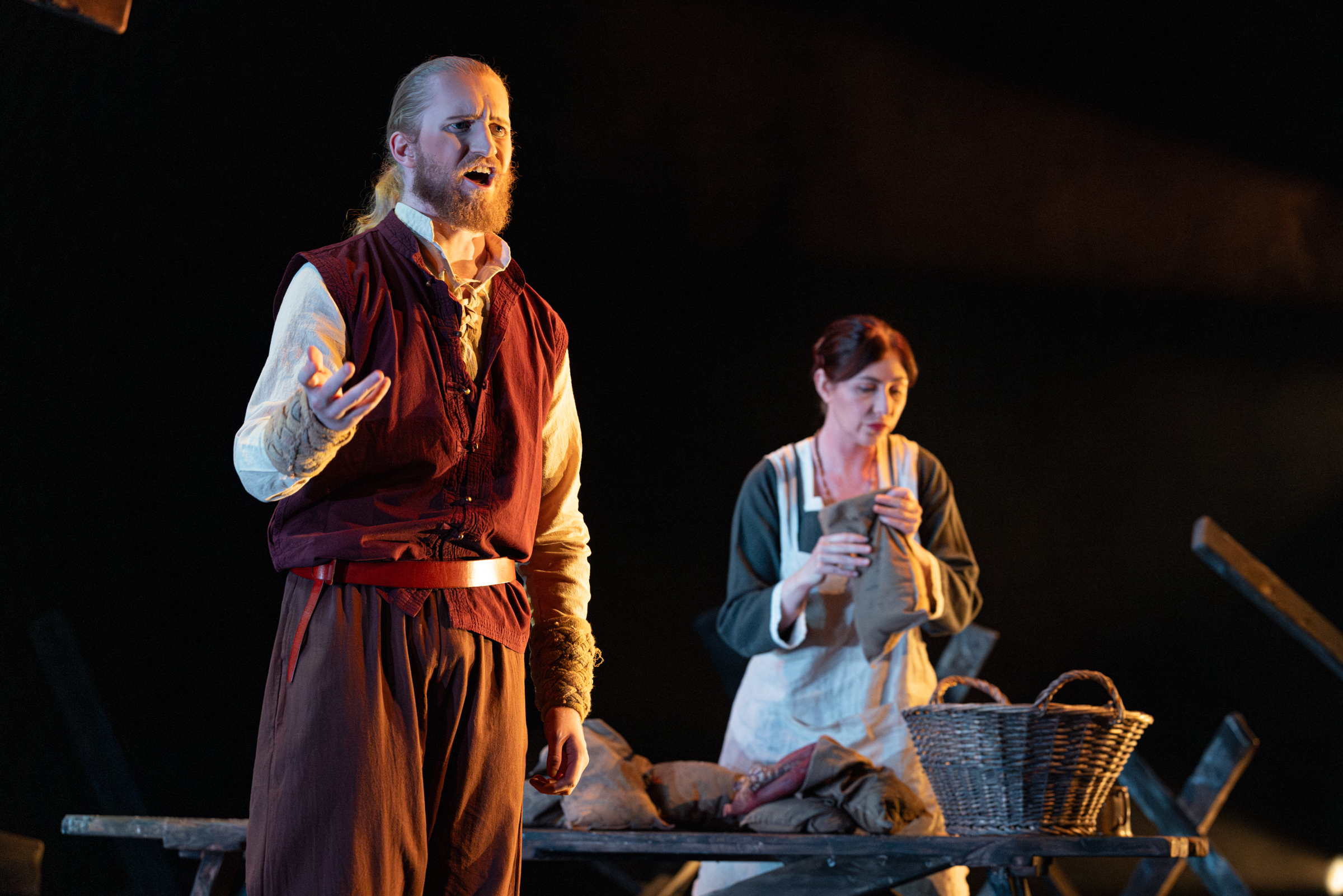
James Bilson as the Father and Maria Woodford as the Mother, photo by Ben Fon, Fon Photography 2024
“The way we are making the grown-up version more unsettling is to have the character have a rapid shift in mood and demeanour, which is a more realistic portrayal of an abusive, drunk person. We enter the scene very jolly, almost euphoric and then transition rapidly into anger and then fear, then back to joy, anger, fear and on and on. The thing that is the most unsettling is this rolling tide of emotion, and the unpredictability of that.”
“The English version is more of a family-oriented portrayal of the of the story. Whereas the German show taps more into the psychology of this broken home, living in extreme poverty and how they would respond to each other and behave. Which isn't always a fairy tale,” chimes in Noah, also playing the father.
One major point of difference in the German version, is that the witch will be played by a male performer. Historically, the witch in Hänsel und Gretel is often played by a male tenor dressed in drag, but Jane was interested in how it would change the story to have the witch not only played by a male but presenting as a male as well. She describes the effect of the casting change as “unnerving”.
“In the German version, rather than the witch being your stereotypical old hag who lives in the forest, it has actually been changed to be a man who holds quite a high position of authority in the village, and is well known,” explains James. “There is a stranger danger message very present in the English version, but in the German version it’s almost more about the fact that you can’t trust everyone, even people who are in positions of authority and are well respected.”
Current students Harriet and Saskia are playing the more light-hearted, comical witches in the English version, and are enjoying the opportunity to play such a cartoonishly villainous character.
“I love playing these kinds of characters. To play somebody who is so over-the-top and extravagant almost allows the childlike version of yourself to come out,” says Harriet. “Bringing parts of my own personality and mannerisms into the role has also been very helpful for my characterisation.”
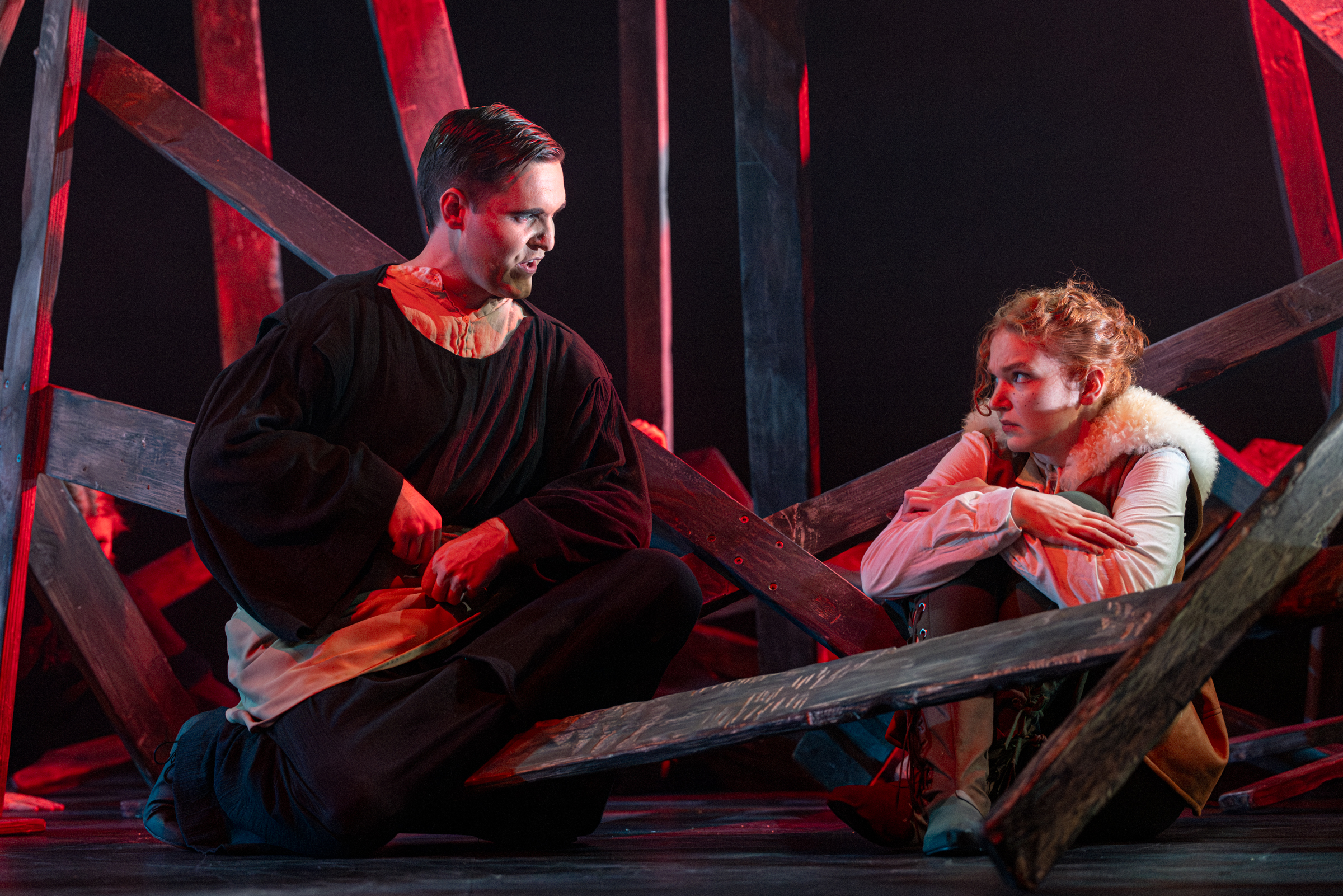
Mitchell Sanders as the Witch (German version) and Chloe James as Hansel, photo by Ben Fon, Fon Photography 2024
“It’s just so much fun,” echoes Saskia. “I usually play characters that are more reserved and very particular, whereas the witch is just pure chaos.”
The opera students have already performed for an audience of children when they performed ‘Parrwang Lifts the Sky’ at the Merlyn Theatre, Malthouse back in May in association with Victorian Opera, so they are aware of what it takes to captivate a young audience.
“I think when performing for children in particular, the visuals are really important to keep them engaged, so the staging and costumes really help,” explains Millie, a current student who plays Gretel in the English version. “We also have to focus a lot on our diction so that the text gets across. We want the kids to be able to follow the story.”
“They’re an interesting audience to perform for because if something is funny, they’re going to laugh, but on the flipside of that if they’re bored, you see it on their faces,” continues Chloe, another student also playing Gretel in the English version. “It motivates me to work that little bit harder and push my characterisation further to try and crack a smile.”
By participating in performance opportunities like Hänsel und Gretel and Parrwang Lifts the Sky, the opera students are not only learning how to tailor their performance styles for different audiences, but are also gaining valuable insights into what life as a professional opera performer will be like.
“From an educational perspective, there's nothing more revealing for us as performers than when we're on stage in front of an audience,” says Noah. “We can spend hundreds of hours in a practice room, but at the end of the day, our prospective employment revolves around performing for an audience. And that's the invaluable opportunity this course provides for us.”
There's nothing more revealing for us as performers than when we're on stage in front of an audience.
“The practice, dedication and depth of characterisation is something that live performance gives you that you can’t get any other way,” echoes Jane. “Our students need to have that depth of exposure, and the course allows the students to deep dive into the practical components of being an opera singer. It’s a very rich learning environment.”
The students are also gaining valuable experience working with other students from across the VCA, including Master of Production (Stage) students who designed the sets and costumes, as well as technical theatre staff from the University of Melbourne’s Union Theatre.
“It’s been fantastic. The other students’ creativity is really impressive,” says James. “The costumes are excellent, and the set is unbelievably minimalist but so evocative.”
“You spend so long on your own craft, it’s easy to forget how much goes into everything else in a production,” muses Millie. “The production design and costumes only enhance our performances, because we learn the designer’s intention behind their choices and that helps us to build up our character’s backstory. By working with set and costume, we all get to create this world together.”
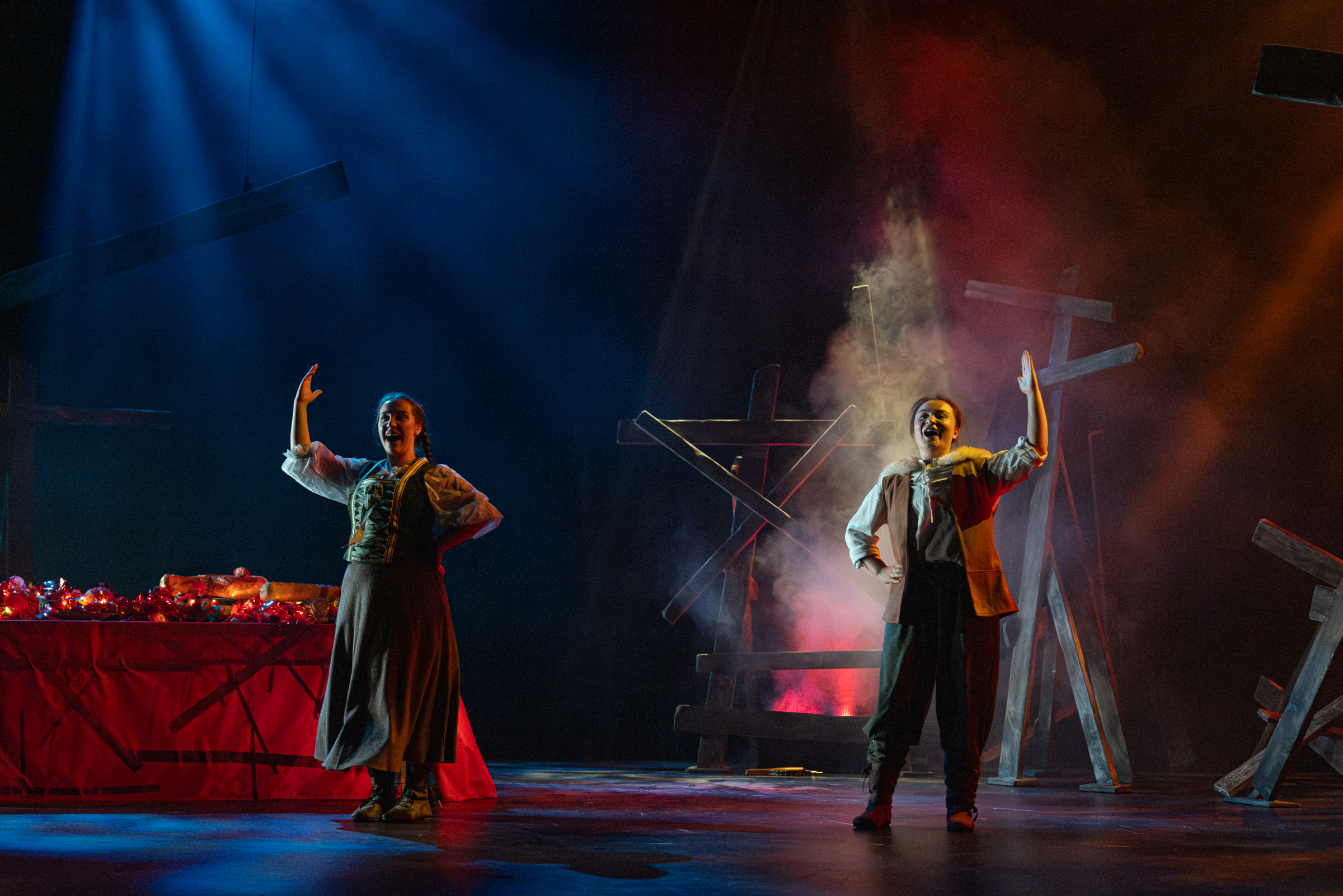
Lucy Schneider (Alumnus) as Gretel and Qiulian Axtens as Hansel, photo by Ben Fon, Fon Photography 2024
There’s always some sort of moral or lesson at the centre of a Grimm fairytale. What is the inherent lesson in Hänsel und Gretel, and is it still relevant today?
“I think it’s about bravery – finding it within yourself, and overcoming the odds,” posits Ashley.
“I also think it’s about intuition and trusting your gut, and the importance of listening to that little message inside you that tells you when something isn’t quite right,” continues Chloe.
“I would say Hansel and Gretel is really a coming-of-age story. And when confronted with the witch, they have to stick together,” says Noah. “They find their way out of it by trusting in each other and in themselves, which is sometimes all you've got.”
“I believe the message is one of hope, that good will always triumph over evil,” says Harriet.
Find out more about studying the Master of Music (Opera Performance) at the Melbourne Conservatorium of Music.
Master of Music (Opera Performance) students interviewed and their Hänsel und Gretel roles:
Chloe Taylor – Gretel, English version
Saskia Mascitti – Mother, English and German versions and Witch, English version
Nicholas Beecher – Father, English and German versions
Noah Straughan - Father, English and German versions
James Billson - Father, English and German versions
Harriet Du Pont – Witch, English version
Millie Brake – Gretel, English version
About Jane Davidson:
Jane Davidson is the Deputy Director of the Victorian College of the Arts, Professor of Creative and Performing Arts, Head of Opera and Chair of the Creativity and Wellbeing Initiative.
Fellow of the Australian Academy of the Humanities. Jane Davidson has extensive experience as a lecturer, supervisor, mentor and researcher. She chairs the Creativity and Wellbeing Research Initiative which investigates what it means for people to achieve wellbeing and how creativity can be harnessed to achieve this aim. Her work includes ageing and life course enquiry, exploring adaptation across a range of social and cultural contexts.
Jane Davidson also coordinates the Master of Music in Opera Performance and works in a range of community and industry contexts. Her distinctive approach to opera direction has received much critical praise. Recent industry collaborators in Australia include West Australian Opera and Victorian Opera.
Unbound: Fine Arts and Music at the University of Melbourne
Discover more stories of creativity from our artistic community across the Victorian College of Arts and the Melbourne Conservatorium of Music.