VCA student film ‘I Dreamt I Was a Butterfly’ sheds light on the experiences of those with frontotemporal dementia and their loved ones
Few mediums have the power to capture complex emotion like film. In their student production ‘I Dreamt I Was a Butterfly’, Master of Film and Television student, Alekh Chapman, Master of Producing student, Erin Christmas and PhD candidate in Neuropsychology, Marnie Drake, harness this storytelling power to portray the journey of frontotemporal dementia diagnosis for patients and their families.
For Alekh, the idea for ‘I Dreamt I Was a Butterfly’ came about from discussions he had with his partner, Marnie, who was conducting a student placement at an outpatient cognitive disorders clinic at the time and working with patients with different types of dementia.
“Initially I was keenly focused on what the visual experience would be of having dementia, but speaking with Marnie, and going through the research, she helped me understand what frontotemporal dementia was like,” says Alekh. “From there, we decided to shift the focus to what it would feel like to go through the diagnostic process for these two people, the person experiencing dementia, and a loved one accompanying them through this journey.”
The film follows a middle-aged couple, Amanda and Grant, and centres on Amanda receiving some life-changing news.
“They have to try to work out, immediately following this news, how they’re going to deal with it, given the impact it will have on Amanda’s ability to live and function,” explains Alekh.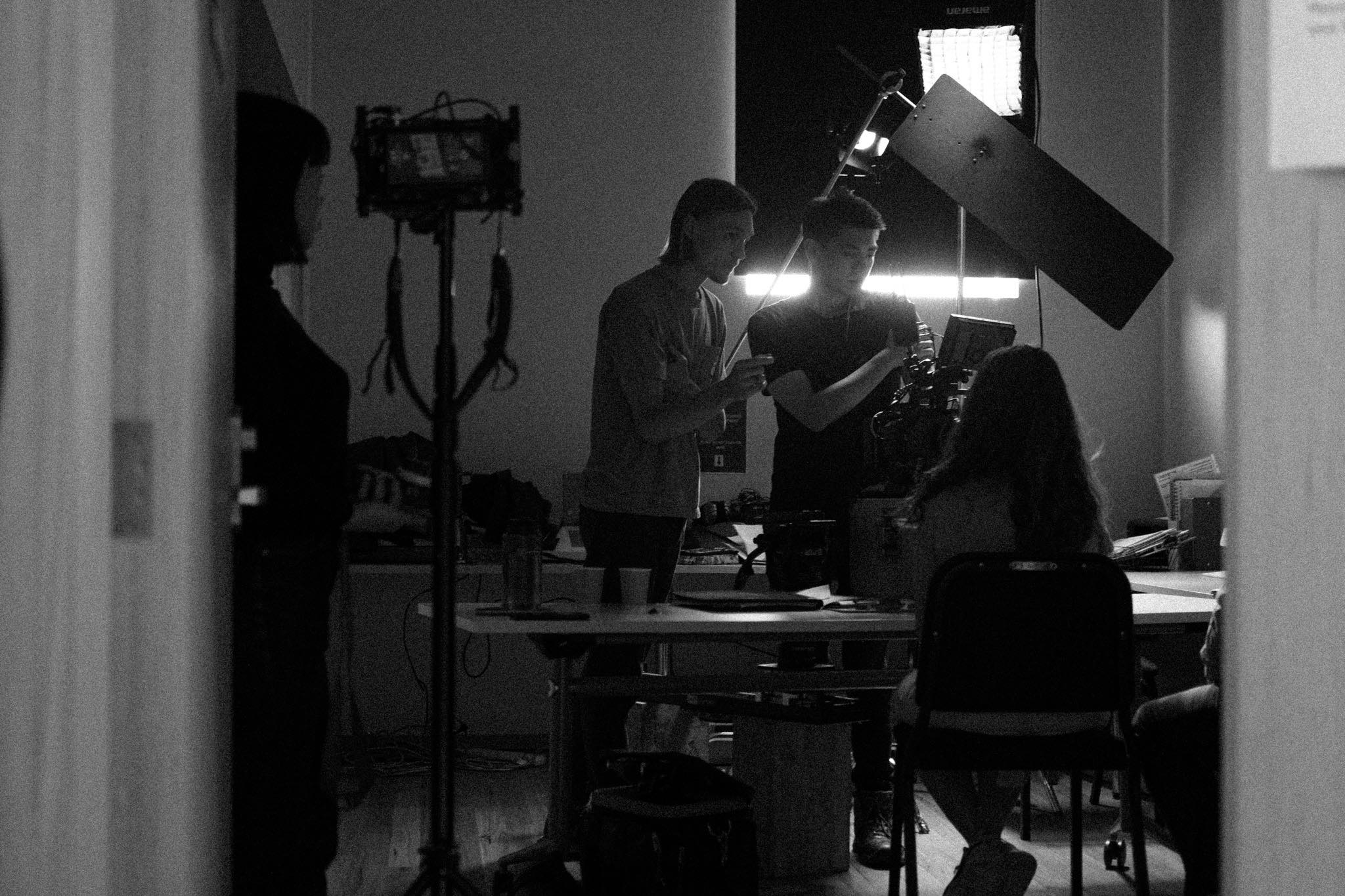
Behind the scenes of I Dreamt I Was a Butterfly, photo by Myles Saitta
When Erin was considering coming on board as a producer, she wanted to make sure the experiences portrayed in Alekh’s script were authentic and grounded in reality.
“I was asking lots of questions about where the idea came from, and what foundations he was drawing on, and he mentioned his partner had a wealth of knowledge and experience in this area,” says Erin.
“We then opened up the collaboration to include Marnie and some of her peers in order to really ground the project. Of course, the film isn’t reflective of everyone’s experiences, but by combining Marnie’s research and Alekh’s creativity as a director, we started to be able to visualise what this diagnosis might look like.”
Marnie was excited to join the project and draw on the knowledge she had gained from her studies to ensure the story was as true to life as possible. She also came on board as the production designer, giving her a unique opportunity to translate clinical research into a visual medium.
“As a clinician, I don’t often get to accompany people on the journey after diagnosis. I mostly give the diagnosis and then wonder what happens next,” explains Marnie. “Alekh was quite drawn to the more human aspects of what it’s like for a caregiver to be there for that diagnosis, and the different journeys that go on from that point. We wanted to explore the possibilities of what that might look like for people.”
Alekh, Erin and Marnie were acutely aware throughout the making of ‘I Dreamt I Was a Butterfly’ that they had a huge responsibility to portray the experience of frontotemporal dementia sensitively. The research process was integral for everyone involved in the film, including the cast and crew, to ensure they were handling the difficult subject matter with care.
“Marnie found some amazing lived experience resources for me to help me put myself in the shoes of both somebody who had been diagnosed with frontotemporal dementia, and the carer of a person with this diagnosis,” says Alekh.
The team also watched as many films as they could find that focused on dementia, to understand what had already been done in this space. Additionally, they read a lot of research papers and resources for clinicians, sourced by Marnie and her peers.
“In the beginning, we were thinking we could represent everything entirely accurately,” explains Marnie. “We sort of went down a research rabbit hole and then had to bring ourselves back out and think about what level of information would be accessible and meaningful for an audience to connect with.”
We had to think about what level of information would be accessible and meaningful for an audience to connect with
The team conducted a series of workshops with everyone involved in the film to ensure that participants had up-to-date information about frontotemporal dementia. The workshops also helped the cast and crew to become more immersed in the world of the film and facilitated strong working relationships.
“The workshops not only helped us to build a really genuine and accurate foundation for the film, but also made us feel more like a team and allowed us to all get on the same page,” says Erin, whose experience on the film have inspired her to train as an intimacy coordinator.
“As a result, the rehearsal and subsequent rewriting process of the scripts happened really organically in a way that was exciting to witness. Everybody was bringing ideas, from the actors to the neuropsychology students, and that collaborative atmosphere was excellent.”
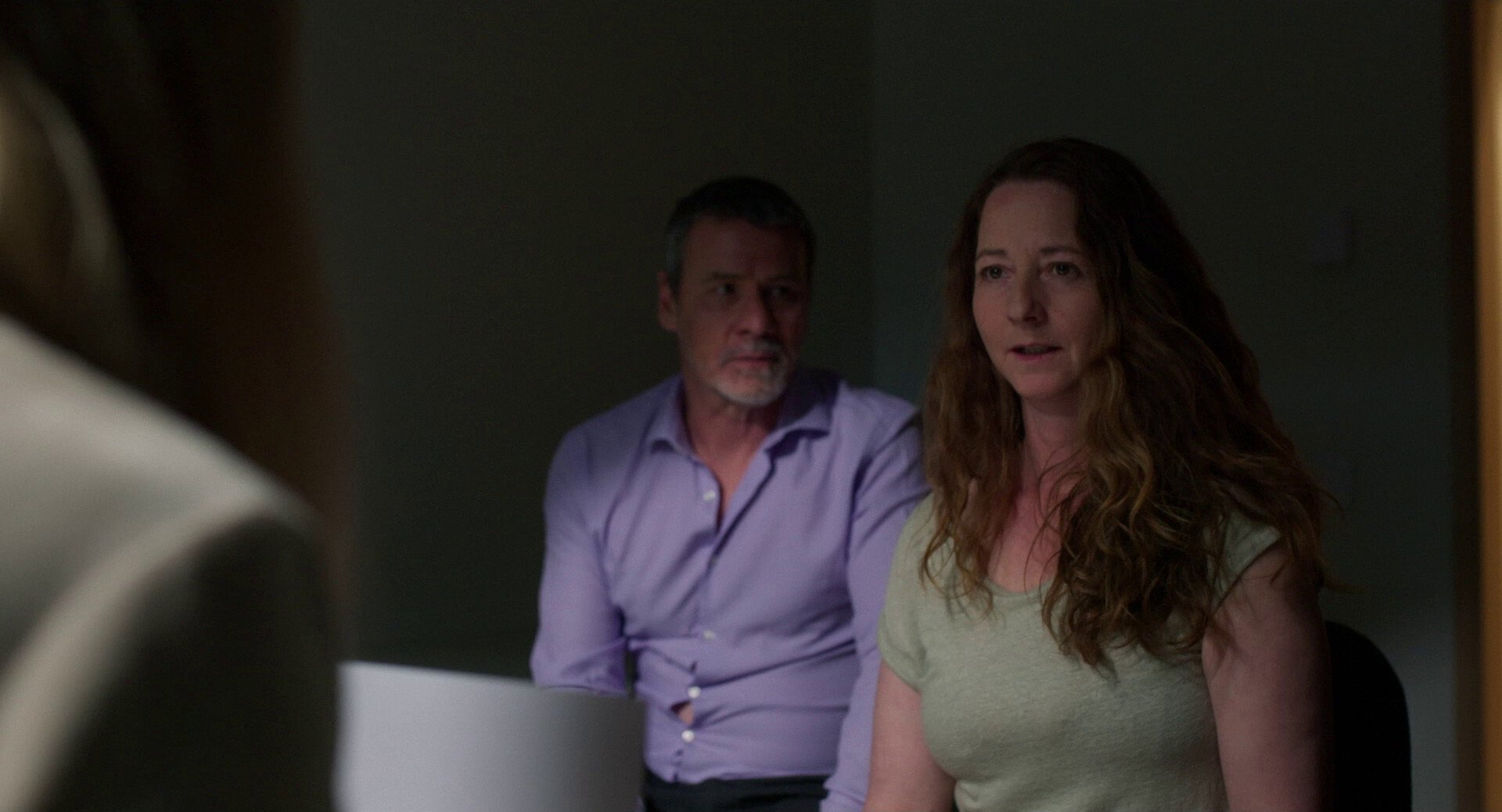
Tim Clarke as Grant and Helene Dunlop as Amanda in 'I Dreamt I Was a Butterfly'
Creating this film at the VCA also provided the team with the support and resources needed to develop this kind of project. The film was, in part, financed by a student assistance grant, as well as providing the filmmakers with the spaces and equipment needed for production. Alekh also notes that the expertise offered by the teaching staff was a resource they couldn’t have gone without.
“Something I’ve found beneficial here at the University of Melbourne, is how willing the staff are to support and help, especially in a creative endeavour like filmmaking. Having staff who understand the process and the intention of what you are trying to do as a filmmaker is so crucial to feeling like you’re supported, and your voice is being heard.”
Art, and especially filmmaking, has a unique power to illuminate the most complex and challenging issues of our time, transforming abstract concepts into tangible, emotional experiences. But what does it mean for the audience to learn about something through a creative medium like film, versus a clinical research paper or news article?
“Research is very objective, and boundaries are rarely crossed,” explains Marnie. “Through film, you can explore the more human side of an issue. It also has a wider scope. Not many people will read a research paper, but film can connect with everyday people.”
Through film, you can explore the more human side of an issue and connect with everyday people
“I think the medium of film is a particularly strong tool for building empathy,” echoes Alekh. “Even though ‘I Dreamt I Was a Butterfly’ is a fictional story, the experiences are based on lived experience research, so there are people out there experiencing similar things. Through film, the audience can gain more of an emotional awareness of what this experience is like, rather than just an objective, clinical awareness.”
“I think the two have to go hand in hand,” continues Erin. “The medical side of things is a good foundation, but you need something to serve that emotional side as well. It’s great to be able to bridge the human experience with clinical research. I think it may also be able to offer a level of comfort to people who are going through this that the clinical route may not be able to service.”
The team are now hoping to get more eyes on ‘I Dreamt I Was a Butterfly’, starting with a festival run in 2025. They also want to work with dementia charities and other grassroots organisations to make the film available to those with lived experience of dementia, their carers and families.
“I feel a sense of responsibility and reciprocity to try to get this great film out there so people can see it, and those involved can get the recognition that they deserve for their great work,” says Alekh.
“I hope it will add to the conversation around dementia in a positive way, and help those who are going through this to feel less alone.”
Find out more about studying the Master of Film and Television at the Victorian College of Arts, University of Melbourne.
Learn more about 'I Dreamt I Was a Butterfly' and follow Alekh on Instagram @alekhchapman.
Unbound: Fine Arts and Music at the University of Melbourne
Discover more stories of creativity from our artistic community across the Victorian College of Arts and the Melbourne Conservatorium of Music at the University of Melbourne.