Stuart Black Fellowship

The Stuart Black Drawing Fellowship supports advanced study and research in the field of Drawing at the Victorian College of the Arts, bringing renowned artists to the Victorian College of the Arts (VCA) so that they can engage our faculty and students in their practices and methods.

Current fellows

Joyce Joumaa


Art Forum date: 5th March 2026

Joyce Joumaa is a visual artist who works in Beirut, Montreal, and Amsterdam. After growing up in Tripoli, Lebanon, she pursued her studies in Film at Concordia University. Working primarily with video, Joumaa’s work engages with histories shaped by conflict and crisis while specifically investigating the phenomenology of political performance, often rooted in her native Lebanon or diasporic experiences.

Through documentary and experimental filmmaking, archival research, and photography, her practice attempts to create narratives that reimagine our relationship to past events, historical figures, or emblematic sites, examining how they continue to act upon us in the present. Joumaa has exhibited at the Montreal Museum of Fine Art, E-flux screening room, the Sharjah Architecture Triennial, the 60th Venice Biennial, and the 35th edition of Ljubljana Biennale of Graphic Arts. Recent solo exhibitions have been held at the Canadian Centre for Architecture, Plein Sud Centre D’exposition, and Eli Kerr Gallery. She received the Hnatyshyn Foundation Prize for Emerging Artists, the 2023 Plein Sud Award, and a 2025 FoundWork Prize finalist.
Alexandra Juhasz


Art Forum date: 2nd April 2026

Dr. Alexandra Juhasz is a Distinguished Professor of Film at Brooklyn College, CUNY. She makes and studies committed media practices that contribute to political change and individual and community growth. She is the author/editor of scholarly books on AIDS including AIDS TV (Duke, 1995) and  We Are Having this Conversation Now: The Times of AIDS Cultural Production (with Ted Kerr, Duke, 2022); fake (and real) documentaries (The Blackwell Companion to Contemporary Documentary, with Alisa Lebow, 2015) and Really Fake (with Nishant Shah and Ganaele Langlois, Minnesota, 2021); YouTube (Learning From YouTube, MIT Press, 2013); and Black lesbian filmmaking (with Yvonne Welbon, Sisters in the Life: 25 Years of African-American Lesbian Filmmaking, Duke 2018). 

She is the producer of educational videotapes on feminist issues from AIDS to teen pregnancy as well as the feature fake documentaries The Watermelon Woman (Cheryl Dunye, 1996) and The Owls (Dunye, 2010). She writes about her cultural and political commitments in scholarly and more public platforms including  Hyperallergic, BOMB, MS, X-tra, and Lambda Literary Review. Her edited anthology of community-produced poetry about Fake News, My Phone Lies to Me was published in Fall 2022 by punctum press. More about that project is here:  fakenews-poetry.org.

Jenna Lee


Art Forum date: 7th May 2026

Jenna Lee is a Gulumerridjin (Larrakia), Wardaman, and KarraJarri woman with Japanese, Chinese, Filipino, and Anglo-Australian (Irish and Scottish) ancestry. Lee’s practice explores language, materiality, and the transformation of inherited narratives. Deeply intrigued by what is lost in translation, Lee explores the spaces between words, the felt but unwritten, capturing the subtleties that surround language. Her work channels these overlooked nuances into immersive installations, works on paper, sculpture, and multimedia.

Working primarily with books, viewed as colonial artefacts, Lee interrogates dictionaries that have poorly compiled First Peoples languages and applies Larrakia linguistics, using this process to better describe the world she sees around her. Through deconstruction and reconstruction, she engages with materials that echo the past, revealing the hidden stories they carry. Her work seeks to uncover the unseen forces shaping our understanding of history and identity, drawing attention to what time has eroded and collective memory has suppressed. Lee’s practice has been recognised through numerous awards, including the 2024 Waterhouse Natural Science Art Prize, the 2023 Hazelhurst Art on Paper Award (Emerging Artist), the 2020 Wandjuk Marika 3D Memorial Award (NATSIAA), and the 2019 Dreaming Award (National Indigenous Art Award, Australia Council).

Photo credit: James Westland courtesy Craft Victoria

Jean-Pascal Flavien


Jean-Pascal Flavien was born in 1971 in Le Mans, France. He studied Fine Arts in Rennes, France, Italy and at the University of California, Los Angeles and lives and works in Berlin. Flavien’s practice combines elements from architecture, sculpture, and the performative, to create works that are both precise and concrete but also poetic and evocative. Like preliminary sketches of large-scale paintings, his models for houses are maquettes for possible scenarios and perhaps views from the past or future of these fictional buildings. His altered domestic objects, such chairs, tables, outlets or blinds draw attention to the way in which design and architecture shape our experience of space but also how they can more fundamentally determine our experience of ourselves and of others.

Flavien’s recent solo exhibitions include: make-up house, San Gimignano Lichtenberg, Berlin (2022- ongoing); Greenhouse, Fabre, Paris (2019); house with things behind, Heidelberger Kunstverein, Heidelberg (2018); dancers sleeping inside a building, Les Ateliers de Rennes  –   Biennale d’Art Contemporain, Musée de la Danse, Rennes (2016); statement house (temporary title), RCA, London (2015); Cinonema, no drama cinema, South London Gallery, London (2012); Jean-Pascal Flavien, Kunstverein, Langenhagen (2012), and PLAY, HEDAH/Jan van Eyck Academie, Maastricht (2011). Flavien has also been included in exhibitions at: Centre Pompidou, Paris (2019); Neuer Berliner Kunstverein, Berlin (2019); Beirut Art Center, Beirut (2018); MAAT, Lisbon (2017); CAC Brétigny – Centre d’Art Contemporain, Brétigny-sur-Orge (2016); Le Plateau – FRAC Ile-de-France, Paris (2016); Palais de Tokyo, Paris (2014). The life-sized project folding house (to be continued) was acquired for the collection of the NMNM Nouveau Musée National de Monaco and inaugurated in July 2016 on the museum’s outside terrace.

Harriette Bryant


Harriette Bryant grew up across many communities, from Cundalee Mission (Kalgoorlie) through Yalata, Pipalyatjara and Ooldea. She found work and connection at the art centres in each of these places before reconnecting with family in Tjuntjuntjara and Amata in the western APY Lands. In 1999, Harriette returned to Mimili, where she has since become a senior arts worker at Mimili Maku Arts. Her practice is a rewriting of personal and cultural histories, an autobiographical assembling of family storylines, memories, and lived experience. Working with found materials and archival or historical references, her work offers a re-framing of Australian history that is at once darkly humorous, critically incisive, and culturally grounded.

Harriette most prominently speaks to the lived experience and intergenerational impact of the Maralinga and Emu Field nuclear bomb tests in remote South Australia during the 1950s and 1960s. Her works reveal the ongoing human, cultural, and environmental consequences of this history, grounding national narratives in the reality of Anangu lives. Harriette’s work has been widely recognised and acquired by major public institutions throughout Australia. She was a finalist in the 2025 Wynne Prize at the Art Gallery of New South Wales and was shortlisted for the 2024 National Works on Paper Prize at Mornington Peninsula Regional Gallery.

Past fellows

Agnieszka Polska


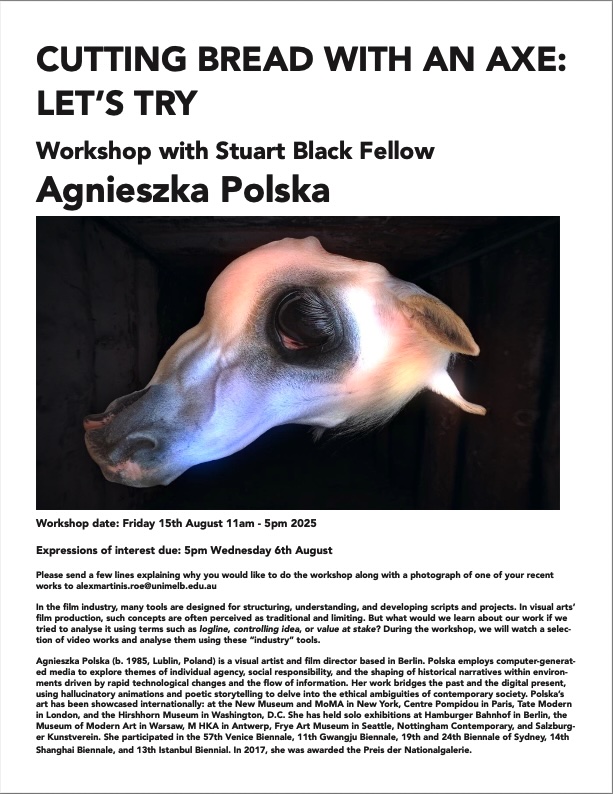
Agnieszka Polska (b. 1985, Lublin, Poland) is a visual artist and film director based in Berlin. Polska employs computer-generated media to explore themes of individual agency, social responsibility, and the shaping of historical narratives within environments driven by rapid technological changes and the flow of information. Her work bridges the past and the digital present, using hallucinatory animations and poetic storytelling to delve into the ethical ambiguities of contemporary society.

Polska’s art has been showcased internationally: at the New Museum and MoMA in New York, Centre Pompidou in Paris, Tate Modern in London, and the Hirshhorn Museum in Washington, D.C. She has held solo exhibitions at Hamburger Bahnhof in Berlin, the Museum of Modern Art in Warsaw, M HKA in Antwerp, Frye Art Museum in Seattle, Nottingham Contemporary, and Salzburger Kunstverein. She participated in the 57th Venice Biennale, 11th Gwangju Biennale, 19th and 24th Biennale of Sydney, 14th Shanghai Biennale, and 13th Istanbul Biennial. In 2017, she was awarded the Preis der Nationalgalerie.

Portrait by Ben Marvin

Marwa Arsanios


Marwa Arsanios’ practice tackles structural questions using different devices, forms and strategies. From architectural spaces, their transformation and adaptability throughout conflict, to artist-run spaces and temporary conventions between feminist communes and cooperatives, the practice tends to make space within and parallel to existing art structures allowing experimentation with different forms of assemblies. Film becomes another form and a space for connecting struggles in the way images refer to each other. In the past four years Arsanios has been attempting to think about these questions from a new materialist and a historical materialist perspective with different feminist movements that are struggling for their land. She tries to look at questions of property, law, economy and ecology from specific plots of land. The main protagonists become these lands and the people who work them.

Solo shows include: Sandretto Foundation (2025), BAK Utrecht (2024), Kunsthalle Bratislava (2023), Heidelberger Kunstverein (2023), Mosaic Rooms, London (2022), Contemporary Arts Center, Cincinnati (2021); Skuc Gallery, Ljubljana (2018); Beirut Art Center (2017); Hammer Museum, Los Angeles (2016); Witte de With, Rotterdam (2016); Kunsthalle Lissabon, Lisbon (2015); and Art in General, New York (2015). Her work has also been featured in numerous group exhibitions including: Documenta 15 (2022), Mardin biennial (2022), Sydney Biennial film program (2022), 3rd Autostrada Biennale, Pristina (2021); 11th Berlin Biennale (2020); The Renaissance Society, Chicago (2020); Gwangju Biennial (2018); Lülea Biennial (2018); Kunsthalle Wien (2019); 1st Sharjah Architecture Triennial (2019); SF Moma, San Francisco (2019); Warsaw Biennial (2019); 14th Sharjah Biennale (2019); Maxxi Museum, Rome (2017); Ludwig Museum, Cologne (2016); Thessaloniki Biennial (2015); Home Works Forum, Ashkal Alwan, Beirut (2010, 2013, 2015); New Museum, New York (2014); 55th Venice Biennial (2013); M HKA, Antwerp (2013),); the 12th Istanbul Biennial (2011).

Arsanios was a researcher in the Fine Art Department at the Jan Van Eyck Academie, Maastricht (2010–12). She completed a PhD at the Akademie der bildenden Künste in Vienna and is now Professor at the The Royal Academy of Fine Arts (KASK) in Ghent.

Petra Bauer


Petra Bauer is an artist and filmmaker based in Stockholm whose practice unfolds through long-term collaborations at the intersection of feminist politics, social movements, and the moving image. She approaches filmmaking not merely as representation but as a shared method—one that listens, questions, and builds solidarities across difference. Her work engages film as a space for collective inquiry, political memory, and the rehearsal of alternative forms of life.

Bauer studied at the Malmö Art Academy and holds a PhD from Konstfack University of Arts, Crafts and Design. She is currently Professor in Film & Media and responsible for the research area Art, Technology & Materiality at Stockholm University of the Arts, and has held a professorship in moving image at the Royal Institute of Art since 2016.

Over the years, she has co-developed cinematic and pedagogical processes with grassroots networks—ranging from SCOT-PEP’s advocacy for sex workers’ rights in Scotland, to collaborations with Southall Black Sisters in London, feminist archives and women’s centres across Europe. She has also worked closely with activist Carolina Sinisalo and filmmaker Marius Dybwad Brandrud in exploring grief, resistance, and political witnessing through film. These projects are shaped by a politics of listening, where storytelling becomes both a form of resistance and a practice of care.

Her films and research have been presented at venues such as The Showroom, Collective, Fruitmarket, Tensta konsthall, the Venice Biennale, and Museo Reina Sofía, among others.

Ruth Buchanan


Ruth Buchanan is an artist and uri of Taranaki who runs her studio out of Tāmaki Makaurau Auckland and Berlin. She works across exhibition making, writing, design, publishing, and teaching. Her work draws out the contested and dynamic relationship between the body, power, language, and the archive. She gained a BFA from the Elam School of Fine Art, Auckland, an MA (Fine Art) from the Piet Zwart Institute, Rotterdam, and was a fine arts researcher at the Jan van Eyck Academy, Maastricht.

She has realised major commissions in a variety of contexts including Kunstmuseum Basel | Gegenwart; Govett-Brewster Art Gallery, New Plymouth; Kroller-Muller Museum, Otterlo; MASP, São Paulo; Toi o Tāmaki Auckland Art Gallery; Gwangju Biennale; Badischer Kunstverein, Karlsruhe; Hamburger Bahnhof, Berlin; Tate Modern, London; and The Showroom, London.

She has contributed to group exhibitions at KW Institute of Contemporary Art, Berlin; Remai Modern, Saskatoon; Institute of Modern Art, Brisbane; Kunsthaus Bregenz; Arnolfini, Bristol; If I Can’t Dance, Amsterdam; the Stedelijk Museum, Amsterdam, and others.

In 2018 she received the Walters Prize, Aotearoa New Zealand by judge Adriano Pedrosa. She has held a guest professorship at the Royal Institute of Art, Stockholm, assistant professor in the class of Prof. Judith Hopf at the Städelschule, Frankfurt and has taught at, amongst others, the Rietveld Academy, Amsterdam, and Hidesheim Univeristy. She publishes regularly and is currently co-editing the collected works of Aotearoa author J.C. Sturm.

Buchanan is Kaitohu Director of Artspace Aotearoa, Tamaki Makaurau Auckland.

Portrait by Jonas Häggi

Kait James


Kait James is a proud Wadawurrung artist whose work boldly challenges stereotypical representations of Indigenous culture, drawing from both her Indigenous and Anglo heritage. Through her art, she critiques and subverts the often narrow and homogenised depictions of Aboriginal identity in Australia, offering a deeper, more nuanced exploration of history, culture, and self-determination. Since beginning her professional practice in 2018, Kait has mounted several solo exhibitions at prominent venues such as the Warrnambool Art Gallery, Art Gallery of Ballarat, Geelong Gallery, Neon Parc, and the Koorie Heritage Trust. In addition to her gallery shows, Kait’s work have been collected by leading institutions and has contributed to public art projects of various scales across Victoria, reinforcing her commitment to making art that engages the public in critical conversations. Predominantly working with textiles, Kait’s practice is a vibrant fusion of techniques and themes. She incorporates fabric collage, embroidery, rug tufting, and engages with ‘Aboriginalia’, a concept she refers to which critiques the generalised and often commodified representations of Indigenous culture. By recontextualising kitsch souvenirs that historically diminish and stereotype Aboriginal identity, she transforms them into powerful statements laden with pop-cultural and political references. These elements challenge colonial conceptions of culture, questioning broader societal understanding and erasure of Indigenous knowledge in contemporary Australia.

Matt Keegan


Matt Keegan is an interdisciplinary artist based in New York, working primarily in photography, collage, and sculpture. His work often explores language and translation, as they pertain to and making sense of the world around us.

Keegan has exhibited at venues including the Museum of Modern Art (NY); SculptureCenter (NY); the Carpenter Center for the Visual Arts (Cambridge, Massachusetts); Contemporary Arts Museum Houston; Grazer Kunstverein (Graz, Austria); The Art Institute of Chicago, and the New Museum (NY).

His book 1996 was published in 2020, by the Center for Art, Research and Alliances (CARA).

Keegan is a Senior Critic in the Painting and Printmaking Department at Yale University.

Vincent Namatjira


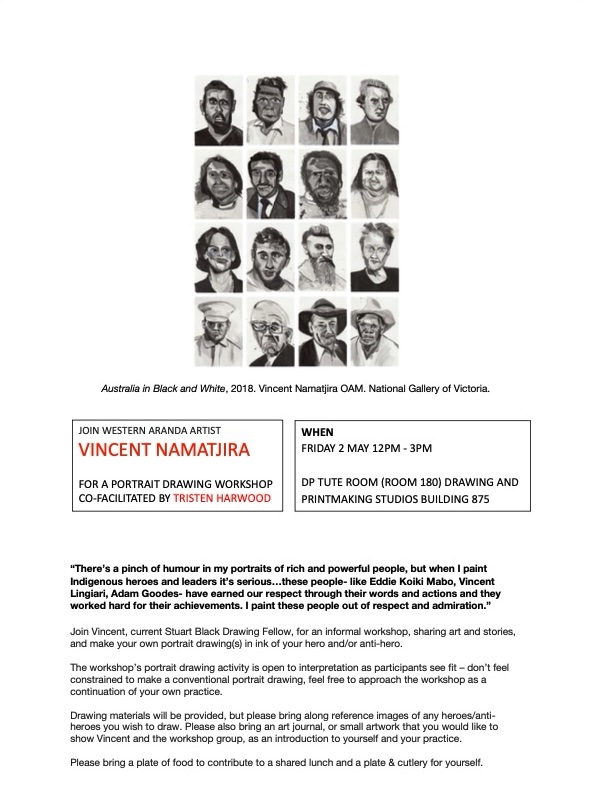
A painter from Indulkana in South Australia, Vincent Namatjira has established himself as a subversive and witty portraitist. Since 2013, he has been painting portraits of important figures, both personally familiar and famously political. Bold, painterly and conceptually rich, Namatjira’s work has gained significant recognition in Australia and abroad. He was the winner of the 2019 Ramsay Art Prize, the first Indigenous artist to win the Archibald Prize in 2020 and in the same year was recipient of the Medal of the Order of Australia (OAM) in honour of his contribution to Indigenous visual arts.

Robert Fielding


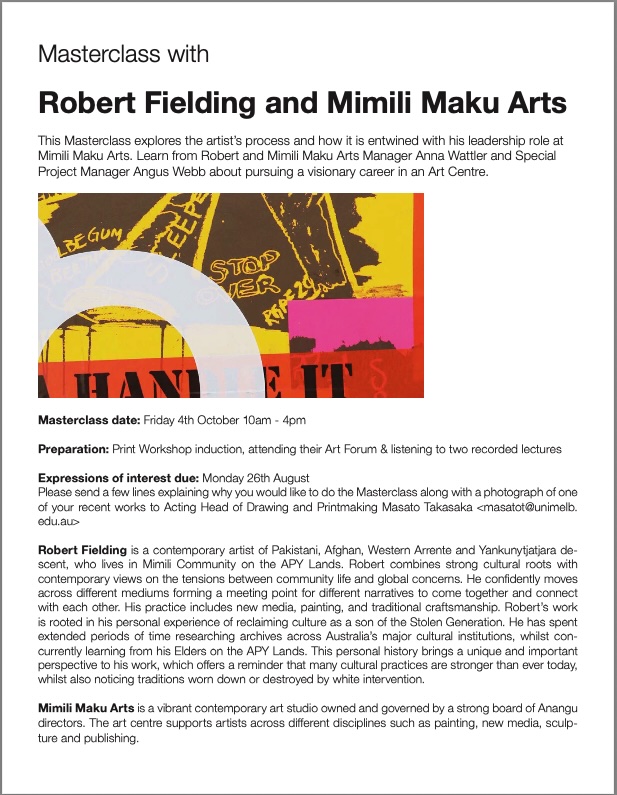
Ngapartji-ngapartji. Nganampa ngura. Manta-miilmilpa. These are some of the Yankunytjatjara terms and concepts that permeate through Robert Fielding’s artand life. A contemporary storyteller of Yankunytjatjara, Western Arrernte and Pakistani descent, Fielding has been based in Mimili Community on the Anangu Pitjantjatjara Yankunytjatjara Lands for the past thirty years. Fielding’s work is rooted in his personal experience of reclaiming culture as a son of the Stolen Generation. He has spent extended periods of time connecting with Australia’s major cultural institutions, whilst concurrently learning from his Elders on the APY Lands. This personal history brings a uniquely potent perspective to his work, which offers a reminder that many cultural practices are stronger than ever today, whilst also noticing traditions worn down or destroyed by white intervention. His work is a stern truth-telling and a reconciliatory call for unity, constantly bridging perceived opposites, creating new connections and community around him.

Through residencies at Canberra Glassworks (2023) and McClelland Sculpture Park (2023), Robert continues to deepen his relationships with peers throughout Australia, always generously inviting collaboration and co-creation. As a mentor to artists and staff at Mimili Maku Arts, Fielding has been integral to supporting and nurturing culturally safe spaces of knowledge exchange. Fielding will be joined during his residency at VCA by long-term Mimili Maku Arts co-manager Angus Webb who has worked alongside Mimili artists in creating new models of safely engaging with institutions for the past seven years. Mimili Maku Arts is an Aboriginal-owned and governed contemporary art studio home to some of the most renowned artists practicing in Australia today. The centre supports future generations of Anangu in Mimili, with strong roots planted in culture and country.

Mia Boe


Mia Boe is a painter from Brisbane with Butchulla and Burmese ancestry. The inheritance and disinheritance of both cultures is the focus of her practice. Boe’s paintings respond, sometimes obliquely, to historical and contemporary acts of violence perpetrated on the people and lands of Burma and Australia. More recently, Boe has drawn on her interests in science fiction, literature and cinema. Selected solo exhibitions include Guwinganj, Hervey Bay Regional Gallery, Hervey Bay, QLD, 2024; Imagined realistic minds, Sutton Gallery, Melbourne, 2024; The Aboriginal Robot, Roslyn Oxley9 Gallery, Sydney, 2024; Going Insein, Gertrude Contemporary Glasshouse, Melbourne, 2023.

During her fellowship Mia gave a talk as part of the Art Forum series.

She also gave a masterclass for students from across VCA Art programmes exploring the importance of science fiction storytelling to create new ways of understanding and how it can be relevant to an art practice that analyses the world around them. The students engaged in a close reading of a text by Ursula K Le Guin, group discussions and drawing exercises, and students looked at the history of science fiction novels and the work of contemporary artists to create visual and literary narratives.

Heman Chong


Heman Chong is an artist whose work is located at the intersection between image, performance, situations and writing. His practice can be read as an imagining, interrogation and sometimes intervention into infrastructure as an everyday medium of politics. His work has been the subject of solo exhibitions at UCCA Dune, STPI, Het Nieuwe Instituut, Weserburg Museum, Jameel Arts Center, Swiss Institute New York, Art in General, Artsonje Center, Rockbund Art Museum, South London Gallery, NUS Museum, amongst many others.

In 2006, he developed a writing workshop with Leif Magne Tangen at Project Arts Center in Dublin where they co-authored PHILIP (2007), a science fiction novel with Mark Aerial Waller, Cosmin Costinas, Rosemary Heather, Francis McKee, David Reinfurt and Steve Rushton. Chong is the co-director and founder (with Renée Staal) of The Library of Unread Books, a library made up of donated books previously unread by their owners.

Gladys Kalichini


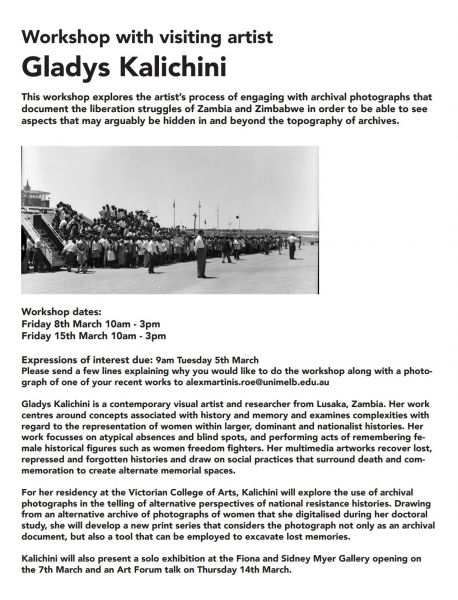
Gladys Kalichini is a contemporary visual artist and researcher from Lusaka, Zambia. Her work centres around concepts associated to history and memory. Her artistic practice is centred on reconnoitring complexities in connection to visibilities and representations of women within larger, dominant and nationalist histories. Essentially, her work is vested in engaging with atypical kinds of absences and blind spots, and reperforming acts of remembering in connection to the recalling of female historic figures such as women freedom fighters. Her multimedia artworks focus on acts of remembrance and stem from a nostalgic place to recover lost, repressed and forgotten histories. Her work draws from social practices that surround death and commemoration to create alternate memorial spaces.

For her residency at the Victorian College of Arts, Kalichini will explore the use of archival photographs in the telling of alternative perspectives of national resistance histories. Drawing from an alternative archive of archival photographs of women that she digitalised during her doctoral study, she will develop a new print series that considers the photograph not only as an archival document, but also a tool that can be employed to excavate lost memories.

Aleksandra Domanović


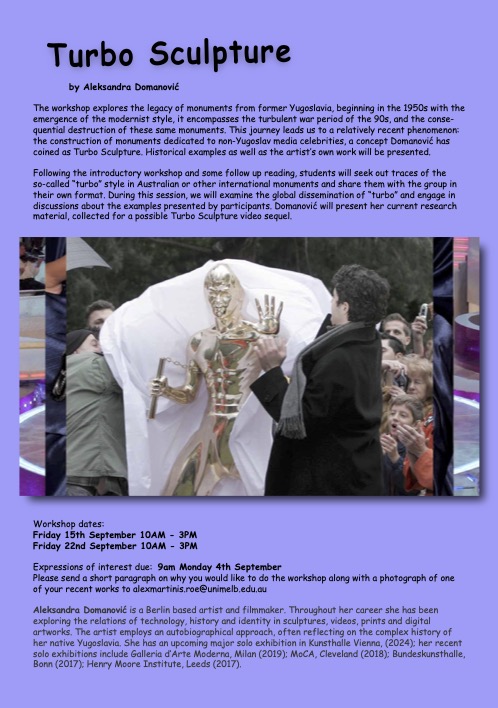
Aleksandra Domanović is a Berlin-based artist and filmmaker. Throughout her career she has been exploring the relations of technology, history and identity in sculptures, videos, prints and digital artworks. The artist employs an autobiographical approach, often reflecting on the complex history of her native Yugoslavia. She has an upcoming major solo exhibition in Kunsthalle Vienna (2024); her recent solo exhibitions include Galleria d‛Arte Moderna, Milan (2019); MoCA, Cleveland (2018); Bundeskunsthalle, Bonn (2017); Henry Moore Institute, Leeds (2017).

During her fellowship Aleksandra gave a talk as part of the Art Forum series.

She also gave a masterclass for students from across VCA Art programmes exploring the legacy of monuments from former Yugoslavia. Beginning in the 1950s with the emergence of the modernist style, the workshop encompassed the turbulent war period of the 1990s, and the consequential destruction of these same monuments.

Caitlin Berrigan


Caitlin Berrigan works as a visual artist and writer to explore poetics and queer science fiction as world-making practices through instruments and moving image. Her work enfolds the complexity of interrelations across humans and more-than-humans within spatial ecologies, technologies, and systems of capitalism. She has had recent solo exhibitions at JOAN Los Angeles (2023) and Art in General (2019), and has presented her work at the Whitney Museum, Berlinale Forum Expanded, Henry Art Gallery, Harvard Carpenter Center, Poetry Project, Anthology Film Archives, La Casa Encendida, Ashkal Alwan, Goldsmith's among other international venues. Her experimental writings are published by e-flux, Georgia, MARCH, Duke University Press and Broken Dimanche Press. She has received fellowships and residencies from Creative Capital, the Humboldt Foundation, Skowhegan, Graham Foundation, and Akademie Schloss Solitude. Currently a Senior Postdoctoral Fellow at the Academy of Fine Arts in Vienna, Berrigan has held full-time and visiting faculty positions at NYU Tisch, Caltech, Bard College Berlin, Harvard, and UMass Boston.

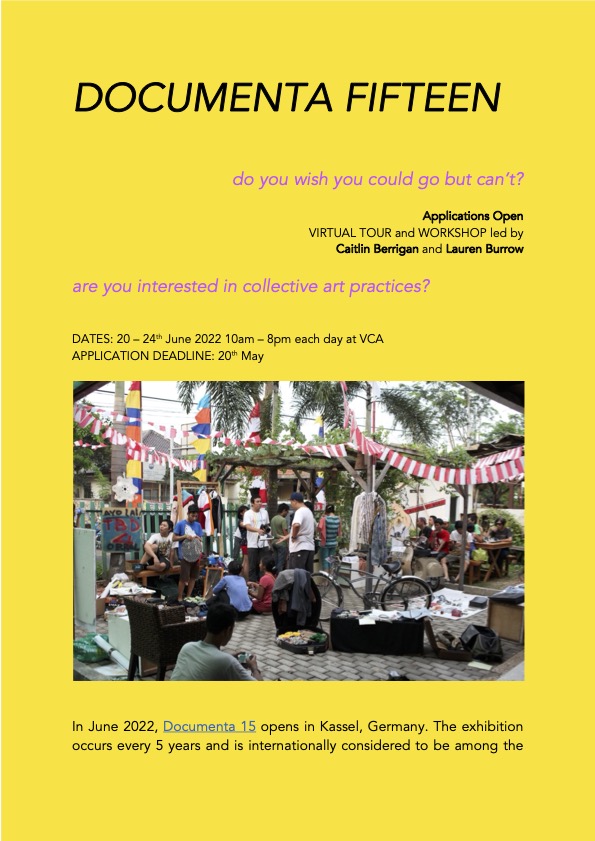
Caitlin and Lauren taught a class together on Documenta 15, curated by the Indonesian art collective ruangrupa and focussed on collective art practices from the Global South. Caitlin visited the exhibition in its first week open to the public and curated a path through the exhibition day-by-day and shared it with VCA students each evening. Caitlin also arranged for special guests Lars Bang Larsen and Marwa Arsanios involved in the exhibition to contribute. Lauren facilitated the in-person digestion of Caitlin’s classes in Naarm/Melbourne.

Lauren Burrow


Lauren Burrow is an artist and educator who is a current Anne and Gordon Samstag International Visual Arts Scholarship recipient and a candidate in the PhD in Practice at the Academy of Fine Arts, Vienna, for her research Private property is an environmental threat. Through sculpture and installation, Burrow uses scrap materials including glass, plastic, and water to investigate flows between the urban and the rural, the individual and the collective, the social and the ecological. Burrow graduated with a Masters of Fine Art (Sculpture) from the Milton Avery Graduate School of the Arts, Bard College, New York, in 2019. She has held exhibitions at PLI, Munich (2022), Holden Garage, Berlin (2021), and TCB Art Inc, Melbourne (2019) and her work has been included in group exhibitions at LaTrobe Art Institute (2023), Queensland Art Gallery | Gallery of Modern Art (2023), the Australian Centre of Contemporary Art, Melbourne (2021), and Hessel Museum of Art, New York (2021).

Caitlin and Lauren taught a class together on Documenta 15, curated by the Indonesian art collective ruangrupa and focussed on collective art practices from the Global South. Caitlin visited the exhibition in its first week open to the public and curated a path through the exhibition day-by-day and shared it with VCA students each evening. Caitlin also arranged for special guests Lars Bang Larsen and Marwa Arsanios involved in the exhibition to contribute. Lauren facilitated the in-person digestion of Caitlin’s classes in Naarm/Melbourne.

Therese Keogh


Therese Keogh is an artist and writer born on Gunditjmara Country, Australia. Therese’s practice operates at intersections between sculpture, geography, and landscape architecture, to produce multilayered projects exploring the socio-political and material conditions of narrative and knowledge production. Therese works collaboratively through writing and research projects, including facilitating ‘Magnetic Topographies’ with Clare Britton and Kenzee Patterson—looking to collective pedagogies of place—and ‘Written Together’, a shared workshop for non-normative writing in arts research. Therese is invested in collective imaginaries as a process of creating more just relations to lands and waters and is currently undertaking research into ‘The Spoil Grounds’, an offshore dumping ground of dredged material from the Port of Newcastle, on Awabakal and Worimi Country, on the east coast of the Australian continent. Therese holds a BFA from Monash University, an MFA from Sydney College of the Arts, and an MA Geography from Queen Mary University of London. Therese is currently undertaking a PhD at the Victorian College of the Arts.

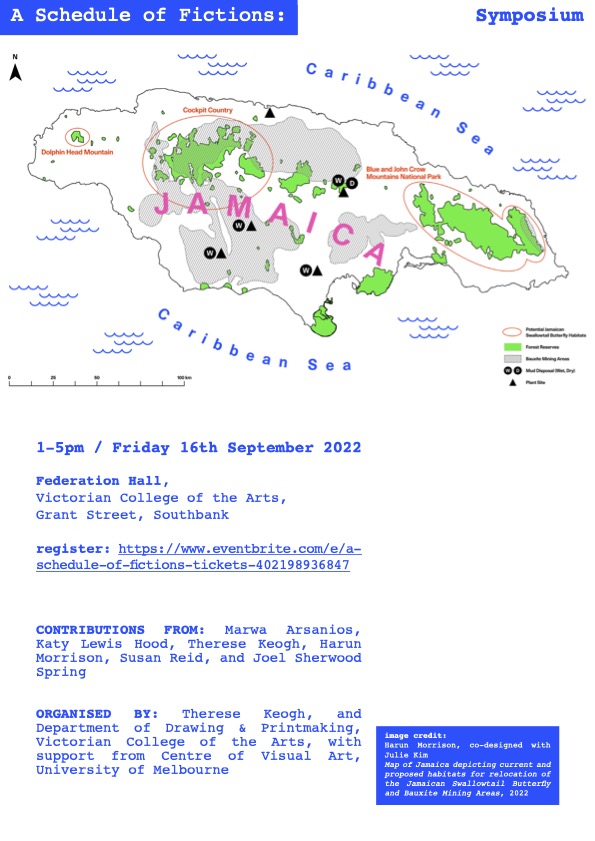
Therese organised a symposium and workshop called A Schedule of Fictions with additional contributions from: Marwa Arsanios, Katy Lewis Hood, Harun Morrison, Susan Reid, and Joel Sherwood Spring.

Katerina Teaiwa


Katerina Teaiwa is a Professor of Pacific Studies in the Gender, Media and Cultural Studies program, School of Culture, History and Language, College of Asia and the Pacific, Australian National University. She has a PhD in Anthropology, a Master’s in Pacific Islands Studies, and a Bachelor of Science. In 2022, Katerina won two National Teaching Excellence Awards including Australian University Teacher of the Year. She also has a background in contemporary Pacific dance and was co-founder of the Oceania Dance Theatre at the University of the South Pacific in Fiji with the late Seiuli Allan Alo. She writes, tweets and speaks regularly on Pacific regionalism, the arts, issues of historical and environmental justice, climate change, cultural policy, indigeneity, diaspora, displacement, colonial resistance, and representations of Pacific peoples. Katerina is author of Consuming Ocean Island: Stories of People and Phosphate from Banaba. She is currently touring her research-based multimedia exhibition Project Banaba commissioned by Carriageworks and curated by Yuki Kihara in 2017. In 2019, Katerina and Yuki collaborated with Jess Mio to curate PB for MTG Hawke's Bay and in 2021/2022 with Te Uru Waitakere Gallery and Banaban communities in Auckland, Aotearoa New Zealand. Katerina’s film work has also been shown at Para Site in Hong Kong and at the 2022 Kathmandu Triennale. Katerina was born and raised in Fiji and is of Banaban, I-Kiribati (Tabiteuean) and African American descent.

Adelita Husni Bey


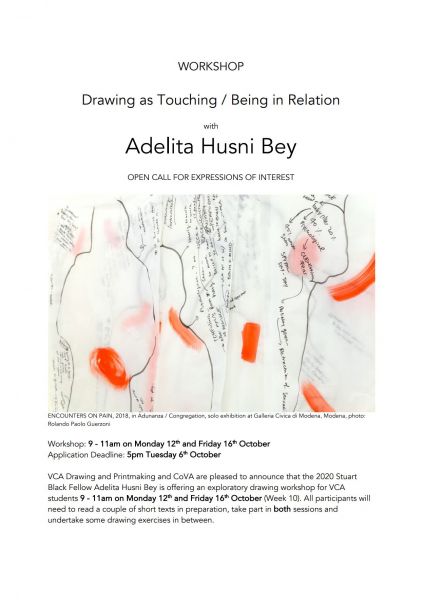
Adelita Husni Bey is an artist and pedagogue interested in anarcho-collectivism, theatre, law and urban studies. She organises gatherings and produces workshops and exhibition work focused on using non-competitive pedagogical models through the framework of contemporary art. Working with activists, architects, jurists, schoolchildren, spoken word poets, actors, urbanists, physical therapists, athletes, teachers and students across different backgrounds, her work focuses on articulating the reality of collectivity under capitalism. Exhibitions include: Maktspill Bergen Kunsthall, 2020, Chiron, New Museum, 2019, Being: New Photography, MoMA, 2018, Dreamlands, Whitney Museum, 2016, The Eighth Climate, 11th Gwangju Biennale, 2015. She is a 2012 Whitney Independent Study Program Fellow, a 2020–2022 Vera List Center for Art and Politics Fellow and has represented Italy at the Venice Biennale of Art, 2017 with a video installation rooted in anti-extractivist struggles. She currently teaches at Cooper Union, New York.

Adelita began her fellowship with a public talk on her work as part of the Artforum series. She also gave a masterclass for students from across VCA Art programmes.

Previous workshops and events